Business Models for Waste Pickers in Ghana
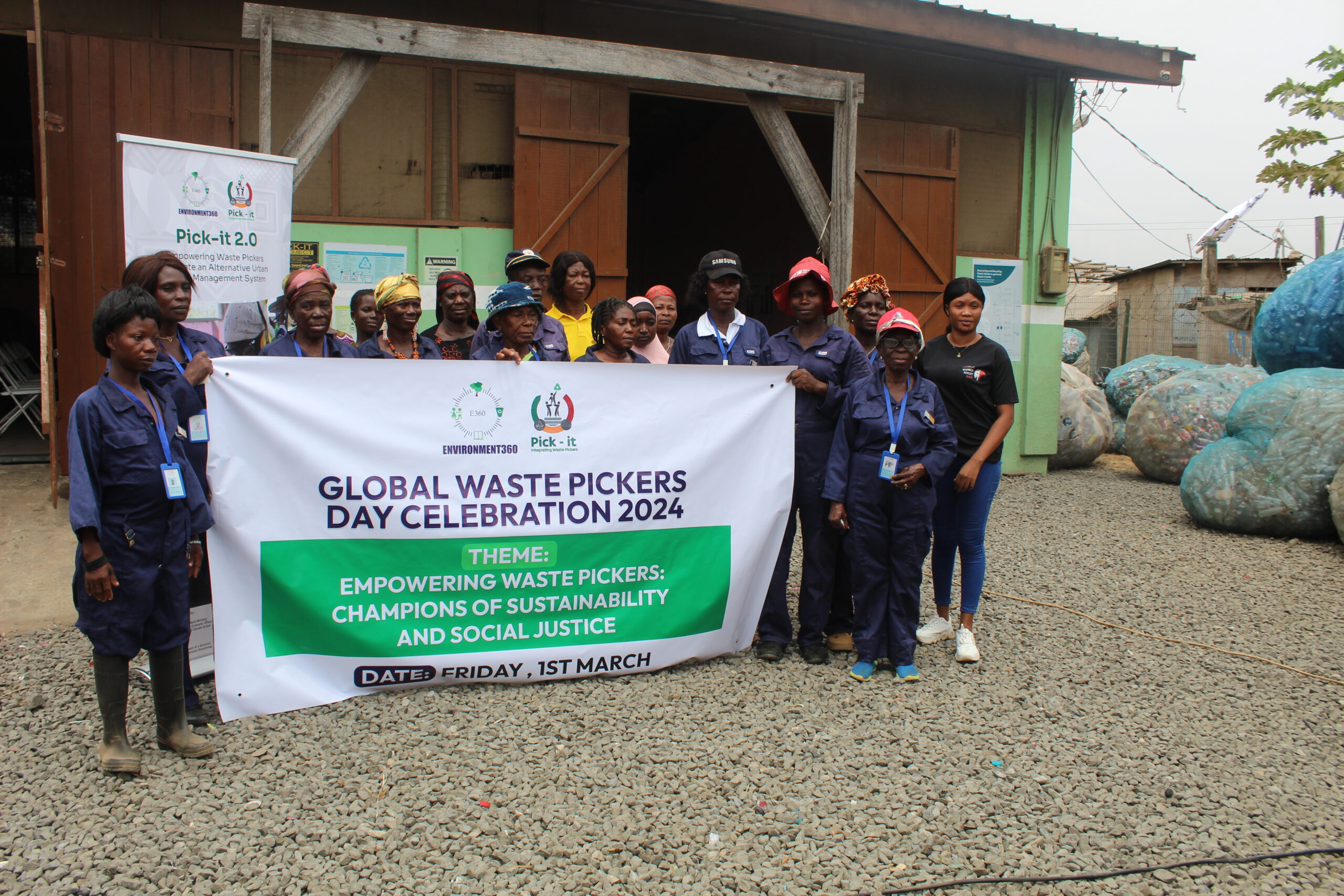
In 2017, Environment360 embarked on a mission to create the first waste picker-led sorting center in Accra, testing business models for waste pickers in Ghana.
The idea was simple enough, provide waste pickers in Tema New Town with a safe place to work, where they could not only segregate but aggregate materials to sell to recyclers at a higher price. However execution, was much more complicated than the idea.
Sustainable Business Models for Waste Pickers in Ghana
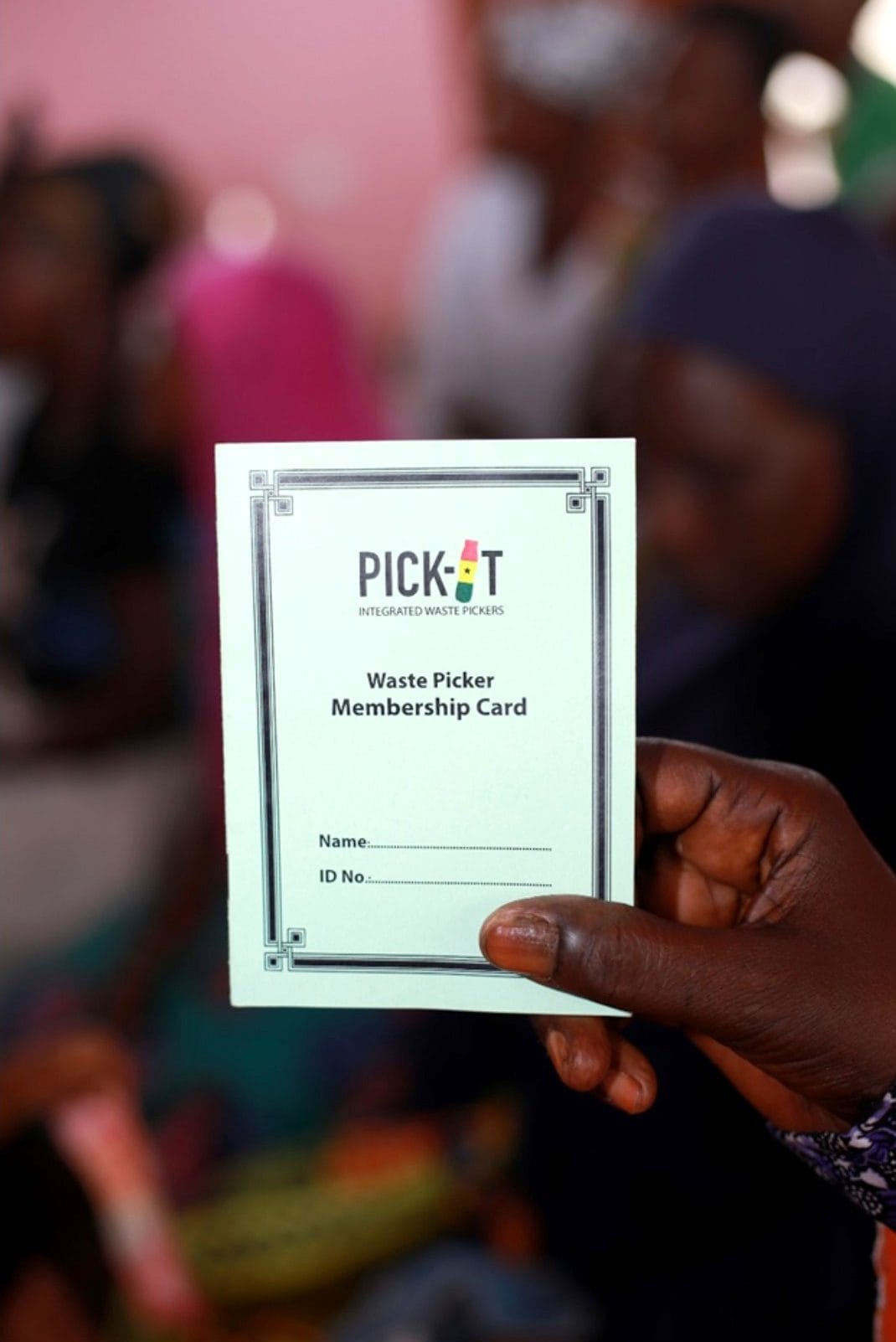
Pick It, although a landmark project, brought up several complex issues that face waste pickers in the Greater Accra area. These lessons are shaping more sustainable business models for waste pickers in Ghana.
Running a Business Is Not Social Welfare
The first issue, is the ability to work together for the common good. During the first phase of Pick-It 30 waste pickers were chosen to participate. Waste pickers came from different areas and varied in backgrounds and cultures.
Although, many waste pickers are more than willing to join forces to gain access to social benefits and protection, when it comes to business most prefer to work by themselves or in smaller groups with people they know and trust. Allowing waste pickers to form their own groups leads to greater productivity and cooperation in groups.
Transportation and Technology Are Needed
Secondly, ensuring access to transportation and technology. During the first phase of Pick It high cost of transportation made it impossible to create a sustainable business.
The center did have a baler provided by a local company, however it was never operational due to a variety of compression and electrical issues.
Adding two flakers, an industrial scale as well as provision of free transportation through Environment360 has increased the income of the facility by 40%.
Mixed Labor Leads to Success
Another issue, is the need for mixed labour. Women whose age range was between 40-65 were the main labour of the center during its first phase.
The intense nature of the work made it difficult for them to segregate, lift heavy materials and operate machinery. Having mixed labor allows the center to operate at a greater efficiency, allowing heavy lifting and loading to be done by men, as well as servicing of technology as needed.
Distinguish Roles and Workers
Lastly, to create a functioning sorting center there must be two distinct type of individuals. One group are collectors and or groups who have the function of bringing materials into the center and being paid for what they bring in. Another group are hired workers who focus solely on adding value to the material brought in.
Waste pickers cannot do both tasks and create a successful business; especially since many depend on the daily income picking provides and others undoubtedly rely on steady income to provide for their family. To expect waste pickers working at sorting centers are willing to have fluctuating incomes is not realistic.
The first phase of Pick It was funded through the Danone Ecosystem and Fanmilk. The second phase of Pick It is funded by Environment360.
To learn more about Pick-It 2.0 please email info@environment360gh.org.

info@environment360gh.org